


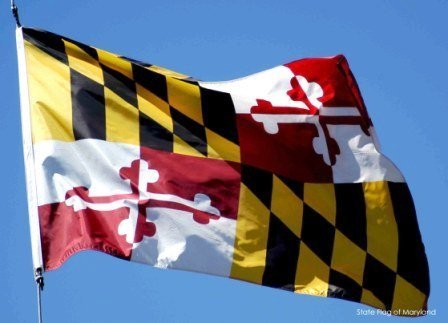
 Having already covered a restriction lifted on liquor licenses at Southside Marketplace and a Homestead Tax Credit transfer in Baltimore City, let’s take a look at some of the other issues discussed at the Maryland General Assembly that affect South Baltimore.
Jake’s Law
In 2011, Riverside’s Jake Owen tragically lost his life at the age of five after being involved in a car accident caused by a driver using a cell phone. Jake’s parents, Susan Yum and Spike Owen, with the help of Delegate Luke Clippinger, pushed for tougher penalties on drivers who cause severe accidents while using a handheld device and proposed Jake’s Law, which just passed. Violators will now face up to a one-year jail term and must pay a $5,000 fine. Previously drivers could be charged with criminal negligence, but in Jake’s case the defense argued that more than 50% of people use cell phones while driving, therefore not making the driver negligent.
Jake’s Law will take effect on October 1, 2014.
Wholesale Reform of the Baltimore City Liquor Board
After an April 2013 audit revealed issues with the state-run Board of Liquor License Commissioners (BLLC), which governs Baltimore City liquor licenses, the state has spent the last nine months reforming the board to change operation and accountability measures. Changes include a requirement that all liquor licenses must be put online and applications must be completed before BLLC hearings.
Pit Bull Legislation
In 2012 the Court of Appeals deemed pit bulls to be “inherently dangerous.” Since that ruling, many landlords, apartment communities, and homeowner associations have restricted pit bulls from their properties as they could as a result be found liable for injuries caused by the dogs. This also caused animal shelters, such as BARCS, to take in a significantly larger number of dogs of this breed.
This decisions was reversed with S. B. 247. Now all dogs are treated the same, and landlords and property owners are not held responsible for injuries caused by dogs, instead the renter is found responsible. This bill was supported by the Humane Society and BARCS.
Uber and Lyft
A bill was proposed to have ride service applications Uber and Lyft be given a different regulatory scheme by the Public Service Commission (PSC) than taxicabs. Uber has threatened to leave Maryland if they are regulated the same as taxicabs, however the bill was not passed by the General Assembly. Since both services operate almost exclusively in Baltimore City, the bill and concept was described by Senator Bill Ferguson to SouthBMore.com as “too foreign of a concept for most legislators” and “a lot for them to take in.”
Though the bill did not pass, the committee studying the issue wrote a letter to the PSC urging them to make sure the companies survive. “This will come up again next year, and it is unlikely the PSC will prevent Uber and Lyft from operating in the next nine months,” said Senator Ferguson. “But, they are operating in very uncertain times.”
Baltimore Redline
The Baltimore Redline is a proposed east-west light rail line going from Woodlawn to Hopkins Bayview, passing through areas such as SoWeBo, Downtown, Fells Point, and Canton. The current plan has been scrutinized regarding its proposed cost of approximately $2.7 billion. The plan is also meeting resistance from Senator Ferguson, Delegate Luke Clippinger and the rest of the District 46 delegation regarding its impact on the Southeastern Baltimore communities, including its path along Boston St. in Canton.
The Redline was not brought up in this year’s General Assembly but will certainly come up in the future. “This will be a major issue for the next two years regarding whether to move forward or not. Are we going to invest $2.7 billion in an east-west line or look into something more cost effective?” said Senator Ferguson.
President Obama allocated $100 million toward the Redline in his 2014 fiscal year budget and Governor Martin O’Malley announced $519 million in state funding in 2013.
Minimum Wage
The Maryland minimum wage will be raised from $7.25/hour to $10.10/hour by 2018, going up $.50 per year starting January 1, 2015. The proposed bill would have changed the wage to $10.10/hour by 2016, but was passed with 2018 as the final date.
Certain businesses will be eligible to pay a nine-month training wage below the approved minimum wage.
